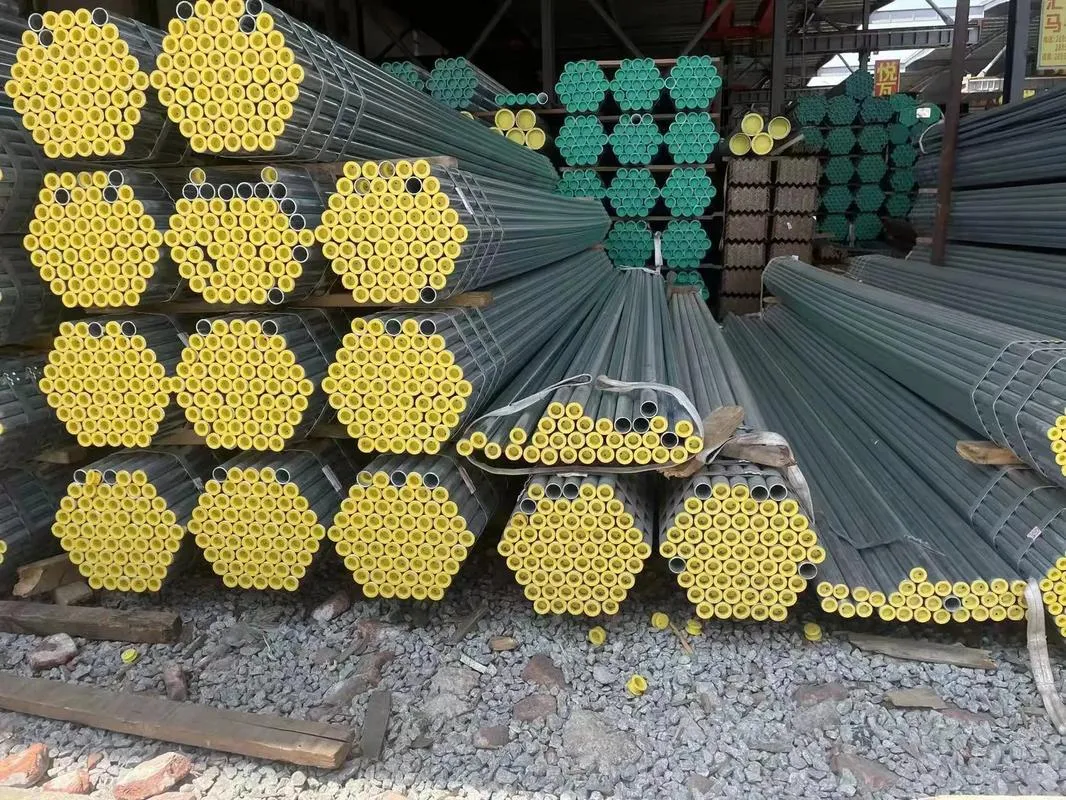
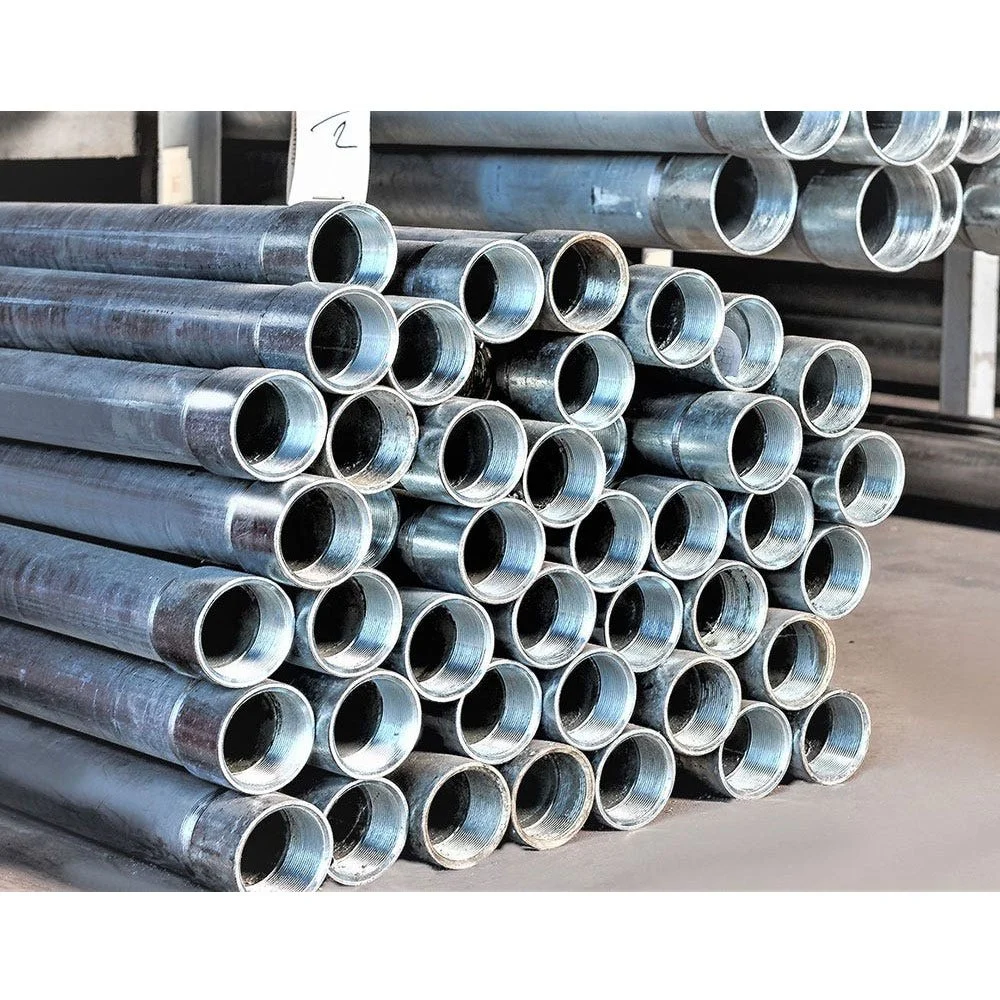
Galvanized welded pipes are widely used in construction, transportation, and agriculture, but their zinc coating often wears down quickly under abrasive conditions. This article explores practical methods to enhance their durability, focusing on coating upgrades and base material improvements.
1. Enhancing the Coating: Surface Modification Techniques
A. Alloy-Based Zinc Coatings
Modifying the zinc coating composition significantly improves hardness and wear resistance:
Zinc-Nickel Alloy Coatings (10-15% nickel): Hardness reaches 250-300 HV, offering 2-3 times better abrasion resistance than pure zinc. Ideal for automotive frames and mining equipment.
Zinc-Iron Alloy Coatings (0.3-0.7% iron): Provide moderate hardness with strong adhesion, a cost-effective choice for agricultural machinery and storage racks.
Zinc-Aluminum-Magnesium Coatings: Aluminum and magnesium form dense oxide layers and intermetallic compounds, boosting both wear and corrosion resistance. Perfect for long-lasting structural applications.
B. Post-Galvanizing Treatments
Advanced Passivation: Using solutions containing silicates, phosphates, or rare-earth elements creates harder, more compact conversion films.
Composite Coatings: Applying epoxy, polyurethane, or ceramic-rich coatings over the zinc layer adds a rigid barrier, ideal for pipelines handling abrasive materials.
2. Strengthening the Base Material: Core Optimization Strategies
A. Upgrading Steel Composition
Micro-Alloyed Steels: Adding niobium, vanadium, or titanium refines grain structure and enhances hardness, delaying wear penetration to the substrate.
High-Strength Wear-Resistant Steels: Using grades like NM400/NM500 (400-500 HB) as the base metal dramatically improves abrasion resistance, though it requires adapted galvanizing processes.
B. Improving Pipe Manufacturing
Weld Seam Heat Treatment: Annealing or quenching the weld zone eliminates soft spots and microstructural inconsistencies, preventing localized wear.
Internal Wall Enhancements: For slurry or granular transport, consider internal rolling, shot blasting, or lining with ceramic inserts for extra protection.
3. Tailored Solutions for Different Applications
Choosing the right approach depends on operational demands:
Scaffolding Pipes: Focus on cost efficiency with zinc-iron alloy coatings and thicker zinc layers (≥20μm).
Agricultural and Grain Transport Pipes: Balance wear and corrosion resistance using zinc-aluminum-magnesium coatings with internal epoxy lining.
Mining and Tailings Pipelines: In extreme conditions, opt for a multi-layer system: wear-resistant steel substrate + zinc-nickel alloy coating + internal ceramic-lined composite pipe.
4. Challenges and Future Trends
Current limitations include coating brittleness from excessive hardening and higher costs from material upgrades. Future advancements may focus on:
Nanocomposite Coatings: Dispersing nano-oxides (e.g., Al₂O₃) into zinc layers for microscopic reinforcement.
Functionally Graded Materials: Designing smooth transitions from hard surfaces to tough substrates to avoid interfacial failure.
Smart Wear Monitoring: Embedding sensor particles in coatings for real-time abrasion tracking and predictive maintenance.
Conclusion
Boosting the abrasion resistance of galvanized welded pipes requires a holistic strategy—combining advanced coatings with stronger base materials. By matching solutions to specific operating conditions, engineers and manufacturers can extend pipe service life, reduce maintenance costs, and improve system reliability across industries.



 +86-15130730198
 +86-13667348580
 info@rd-steel.com
 English
 Español
 Русский язык

 Company News